How Spam Calls Waste HVAC Technician Time (And Money)
The Hidden Tax on Every HVAC Phone Number
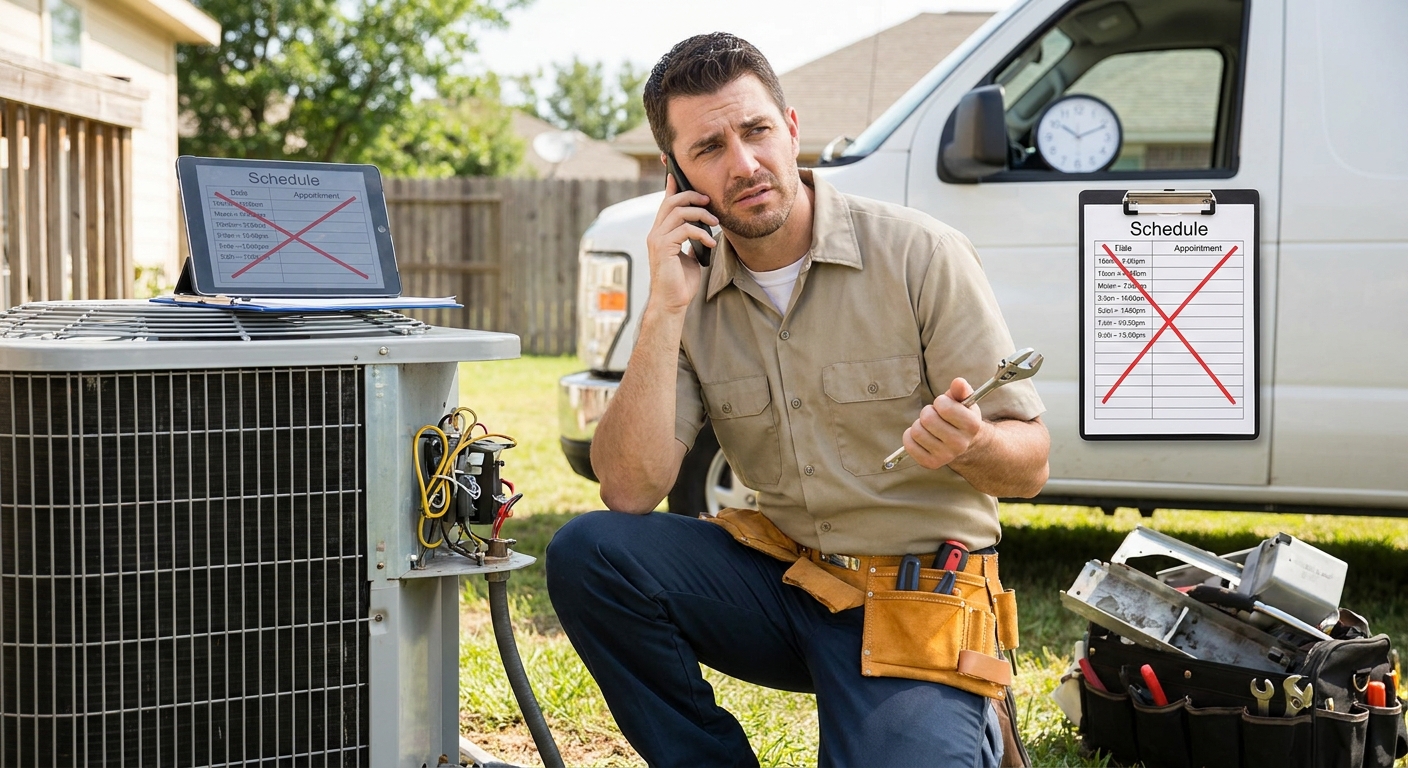
You're under a house, elbow-deep in a condensate line, when your phone buzzes. You wriggle out, peel off a glove, dig the phone out of your pocket, and answer with a hopeful "Hello, this is Mike with Apex Heating and Air."
Silence. Then a click. Then a robotic voice: "We've been trying to reach you about your vehicle's extended warranty..."
You just lost three minutes. Multiply that by 8 to 15 spam calls a day, six days a week, and you're looking at a problem that costs HVAC and plumbing contractors thousands of dollars a year — money most of them don't even realize they're bleeding.
According to the FTC, Americans received over 50 billion robocalls in 2023. Small business numbers — especially those listed on Google, Yelp, and Angi — get hit harder than personal lines. For a typical HVAC shop, that means roughly 20-30% of all inbound calls are junk.
Let's break down exactly what that's costing you, and what you can do about it today.
The Real Dollar Cost of Spam Calls
Here's the math nobody talks about. Say your average HVAC tech bills out at $150 an hour. Every spam call that interrupts a job — answered or not — costs you in three ways:
Let's run real numbers for a 3-truck HVAC business:
- 10 spam calls per truck per day × 3 trucks = 30 spam interruptions daily
- Average lost productivity per call: 5 minutes (conservative)
- Daily wasted time: 2.5 hours
- At $150/hr billable rate: $375/day in lost capacity
- Annualized (260 working days): $97,500 a year
Why HVAC and Plumbing Numbers Get Hammered Hardest
Contractor phone numbers are spam magnets for a few specific reasons:
You Publish Your Number Everywhere
Google Business Profile. Yelp. Angi. Thumbtack. Nextdoor. Your truck wraps. Your website footer. Lead aggregators scrape all of these. Within weeks of launching, your number is in dozens of marketing databases — and the spammy ones get sold and resold.
Lead Generation Services Resell Your Info
Some "lead" services that contractors sign up with are notorious for sharing numbers with affiliated marketing companies. Sign up for one home services platform and your phone starts ringing with insurance pitches, SEO scams, and "we can get you on page one of Google" calls within 48 hours.
Contractors Always Pick Up
This is the killer. Spammers prioritize numbers that answer. Plumbers and HVAC techs are conditioned to grab every ring because it might be a real customer. That responsiveness, ironically, makes you a high-value target for autodialers.
The Most Common Spam Calls Hitting HVAC Shops
If you're in the trades, you know these by heart:
- "Google My Business" scams — fake calls claiming your listing will be removed
- SEO and lead-gen pitches — "I can get you 50 leads a month, guaranteed"
- Merchant cash advance loans — preying on cash-flow tight contractors
- Insurance and warranty spam — vehicle warranties, business insurance, etc.
- Fake utility audits — "You're overpaying on your energy bill"
- AI-generated robocalls — increasingly hard to distinguish from real callers
What Doesn't Work (And Why)
Most contractors try one of these and give up:
Your Next Job Is One Missed Call Away.
PickupBell answers every call and books jobs directly on your calendar — 24/7, automatically. $199/month.
Start Free TrialThe Do Not Call Registry
Useful for personal lines. Borderline useless for business numbers. Most spammers either ignore it or aren't subject to it (debt collectors, political calls, surveys, and overseas operations all slip through).
Carrier Spam Filters
Verizon, T-Mobile, and AT&T have built-in spam labeling. They catch maybe 30-40% of obvious robocalls. The smarter ones — especially the AI-generated ones — get through clean.
Just Ignoring Unknown Numbers
This is what most techs eventually do — and it's devastating to your business. 85% of customers who call a contractor and don't get an answer will call the next one on the list. Ignoring unknowns to dodge spam means missing real jobs.
Hiring a Receptionist
A human receptionist filters spam beautifully — for about $3,500-$5,000 a month, plus benefits, plus the fact they only work 9 to 5. Math doesn't pencil out for most small shops. Here's a full cost breakdown of AI vs human receptionists if you want to dig in.
The Fix: Let an AI Answer First
The cleanest solution is to stop answering your own phone entirely — and let an AI receptionist screen every call before it touches your techs.
This is exactly what PickupBell is built for. The AI picks up every call, identifies whether it's a real customer or a spam pitch, blocks the junk, and only forwards or texts you when there's a real job to book. For everything else — actual customers — it qualifies the lead, checks your calendar, and books the appointment automatically while you stay focused on the truck.
At $199/month flat, it costs less than two missed service calls. Compare that to the $97,500/year a 3-truck shop loses to spam interruptions and the math becomes obvious.
What an AI Receptionist Actually Does With Spam
- Detects the call within the first 2-3 seconds (pauses, robotic cadence, known spam scripts)
- Drops the call or politely ends it without ringing your phone
- Logs it so you have a record (no missed-call anxiety)
- Never interrupts your tech mid-job
Real-World Example: 3-Truck Shop in Phoenix
A Phoenix HVAC company we work with was averaging 14 spam calls per truck per day in peak season. Their lead tech, Carlos, was answering everything because they'd missed a $4,800 ductwork job two months prior by ignoring an unknown number.
After switching to an AI receptionist:
- Spam interruptions to techs: 0
- Real calls forwarded with full job details: 6-8 per day
- Jobs booked automatically without owner involvement: ~22 per week
- Owner time saved: ~14 hours per week
That's a real productivity gain — not a marketing number.
Key Takeaways
- Spam calls cost a typical 3-truck HVAC shop roughly $97,500 a year in lost productivity, conservatively calculated.
- 20-30% of inbound calls to HVAC and plumbing businesses are spam, and contractors get hit harder than most industries because their numbers are publicly listed everywhere.
- The Do Not Call Registry and carrier filters don't work for business numbers — they catch less than half of modern robocalls.
- Ignoring unknown numbers backfires — 85% of customers who don't get an answer move on to the next contractor.
- AI receptionists screen spam in 2-3 seconds and never interrupt your techs, while still answering every real customer 24/7.
- At $199/month flat, PickupBell pays for itself if it saves you even one missed job per month — and it typically saves dozens.
- The best time to stop the bleeding is before peak season — set up call screening now and your techs walk into summer focused on jobs, not robocalls.