How to Handle Emergency Plumbing Calls After Hours
Why After-Hours Emergency Calls Make or Break Plumbing Businesses
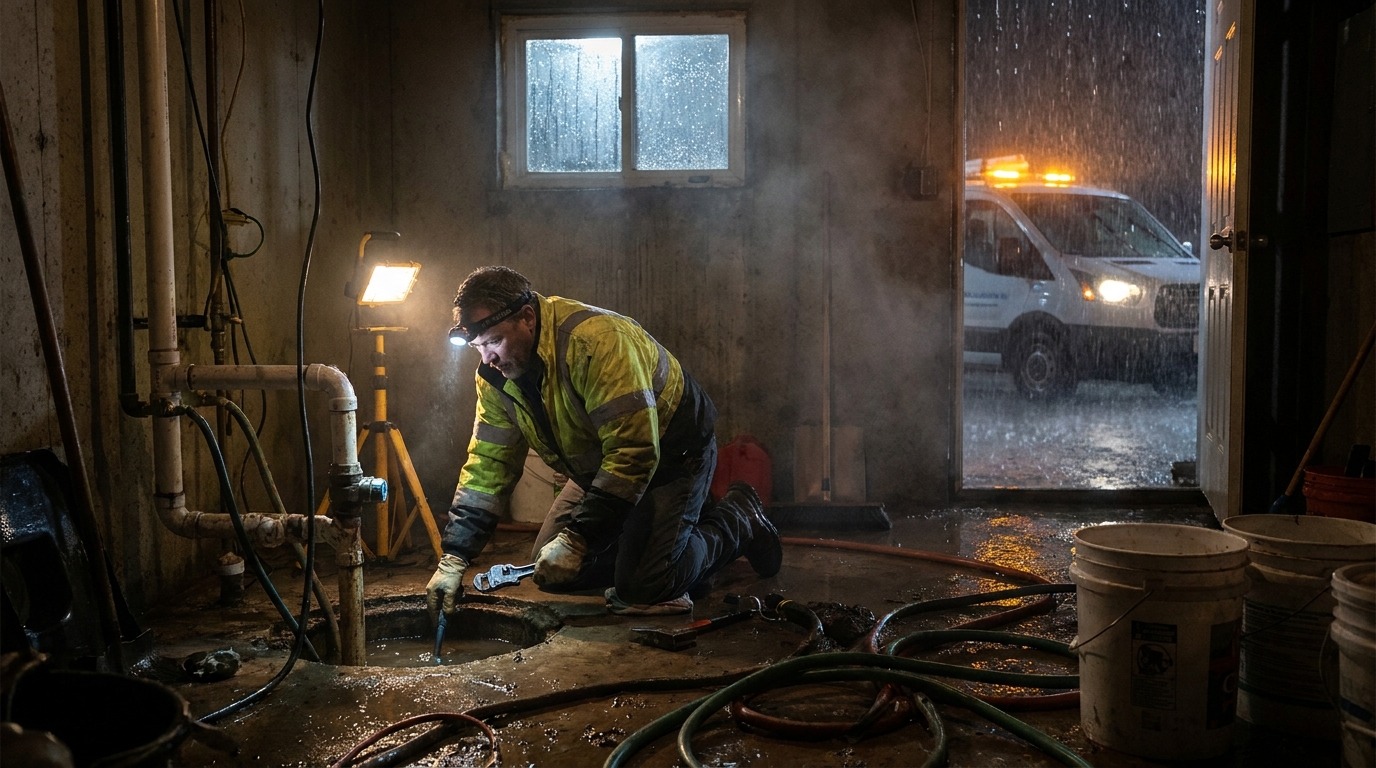
It's 2:47 AM. A homeowner's water heater just burst and their basement is flooding. They grab their phone, search "emergency plumber near me," and start dialing. The first plumber doesn't answer. The second sends them to voicemail. The third picks up — and just booked a $1,800 emergency job.
That third plumber wins almost every time. According to industry data, 85% of customers who reach voicemail during a plumbing emergency won't leave a message — they just call the next number on the list. For a plumbing business, every missed after-hours call is potentially $500 to $3,000 walking out the door.
The problem is that plumbers are humans. You can't answer the phone at 3 AM, drive to a job at 4 AM, and still be sharp for your 8 AM service appointments. So how do the most successful shops handle emergency calls after hours without burning out?
Let's break it down.
Step 1: Decide What Actually Counts as an Emergency
Before you set up any after-hours system, you need a crystal-clear definition of "emergency." Otherwise, you'll get woken up at 1 AM for a slow-dripping faucet.
Most successful plumbing shops use this hierarchy:
True Emergencies (Dispatch Now)
- Active flooding or burst pipes
- Sewage backup into the home
- No water to the entire property
- Gas leak (refer to gas company first)
- Water heater leaking actively (not just no hot water)
- Frozen pipes that haven't burst yet (preventive emergency)
Next-Morning Priority (Book for 7-8 AM)
- No hot water
- Single fixture clogged
- Running toilet
- Low water pressure
- Minor leaks contained in a bucket
Standard Booking (Book for Normal Hours)
- Quotes and estimates
- Routine maintenance
- Non-urgent repairs
Step 2: Build an On-Call Rotation That Doesn't Burn People Out
The old-school approach is one poor plumber holding the on-call phone every night for a week, sleeping with one eye open. That's how good techs quit.
Here's what actually works:
This is where most plumbing businesses get stuck. You either pay a human answering service $400-$800/month to filter calls (and they still book wrong or get tone-deaf with frantic customers), or you let calls go to voicemail and bleed jobs.
There's a third option now. An AI receptionist like PickupBell answers every call 24/7, identifies whether it's a true emergency, and either books the job directly or routes the call to your on-call tech — all for a flat $199/month. No per-call fees. No human service markup. Learn more about how emergency call routing works in real-world plumbing operations.
Step 3: Qualify the Call Before You Dispatch
The worst thing you can do is roll a truck at 3 AM for a job that turns out to be a minor drip the homeowner panicked about. Equally bad: telling someone to wait until morning when their basement is actually filling with water.
Here's the qualification script every after-hours system should follow:
If you're answering calls yourself, train your team on this exact flow. If you're using AI, this is exactly the kind of structured qualification an AI receptionist handles consistently — every call, every time, no matter how tired or stressed everyone is.
Your Next Job Is One Missed Call Away.
PickupBell answers every call and books jobs directly on your calendar — 24/7, automatically. $199/month.
Start Free TrialStep 4: Set Emergency Pricing That Protects Your Margin
After-hours work needs to pay better, full stop. You're disrupting your tech's sleep, paying premium labor rates, and the customer is in a desperate situation where they've already accepted they're paying more.
Typical emergency pricing structures:
- Trip/dispatch fee: $150-$350 (non-refundable, applied to total if work is done)
- After-hours labor multiplier: 1.5x to 2x standard rate
- Holiday/Sunday multiplier: 2x to 2.5x standard rate
- Minimum service charge: $400-$600
For a deeper dive on how response speed affects revenue, check out the true cost of missed calls for HVAC businesses — the math applies the same to plumbing.
Step 5: Capture Every Call, Even When You Can't Take the Job
Sometimes you genuinely can't take the job. Your on-call tech is already on a 4-hour basement flood. Your service area doesn't extend to where the caller is. The customer wants something you don't do.
Don't just hang up. Every after-hours call should result in:
- A logged transcript of what the customer needed
- Contact info captured for follow-up
- A callback scheduled for normal business hours (even if they went with someone else, they might call you next time)
Step 6: Track Your After-Hours Numbers
If you're not measuring it, you can't improve it. Track these monthly:
- Total after-hours calls received
- % answered vs. missed
- % booked vs. quoted but lost
- Average emergency ticket size
- Customer satisfaction on emergency jobs
- On-call tech utilization
Want to see what proper 24/7 coverage looks like in practice? Read why HVAC companies need 24/7 phone coverage or lose jobs — the same principles apply to plumbing, and the revenue impact is even larger because of higher average ticket sizes on emergency plumbing work.
Key Takeaways
- Define your emergencies clearly so true emergencies get immediate dispatch and non-emergencies get morning bookings — no more 2 AM wakeups for slow drips.
- Build a sustainable on-call rotation with weekly shifts, premium pay, and dispatch caps. Burned-out techs quit.
- Qualify every call with a structured script: flooding status, shutoff access, repeat customer, pricing acknowledgment.
- Charge real emergency rates — $150-$350 dispatch fee plus 1.5-2x labor. Quote upfront, every time.
- Capture every call, even the ones you can't take. Today's lost call is tomorrow's repeat customer.
- Track your after-hours metrics monthly. Most shops are missing far more emergency revenue than they realize.
- Consider an AI receptionist for 24/7 coverage. At $199/month flat, PickupBell answers every call, qualifies emergencies, books jobs to your calendar automatically, and routes true emergencies to your on-call tech — without burning anyone out.